E-commerce isn't some exclusive club for big brands with seven-figure marketing budgets anymore. These days, even a small business can sell online, reach customers it would never have found otherwise, and turn that into a genuine growth engine.
The catch? A lot of people jump in without really understanding what makes an online store actually sell. It's tempting to think you just upload some product photos and wait for orders to roll in. In reality, an e-commerce site has to walk the customer through every single step, from their very first visit all the way to the package landing on their doorstep.
At Monark IT, we work with clients across Morocco and Europe on website creation projects — e-commerce included. And there's one thing that comes up almost every time: most lost sales have nothing to do with a lack of traffic. The real problem sits at one specific point in the buying journey — and that's exactly what we're going to unpack here.
What Does E-commerce Actually Mean?
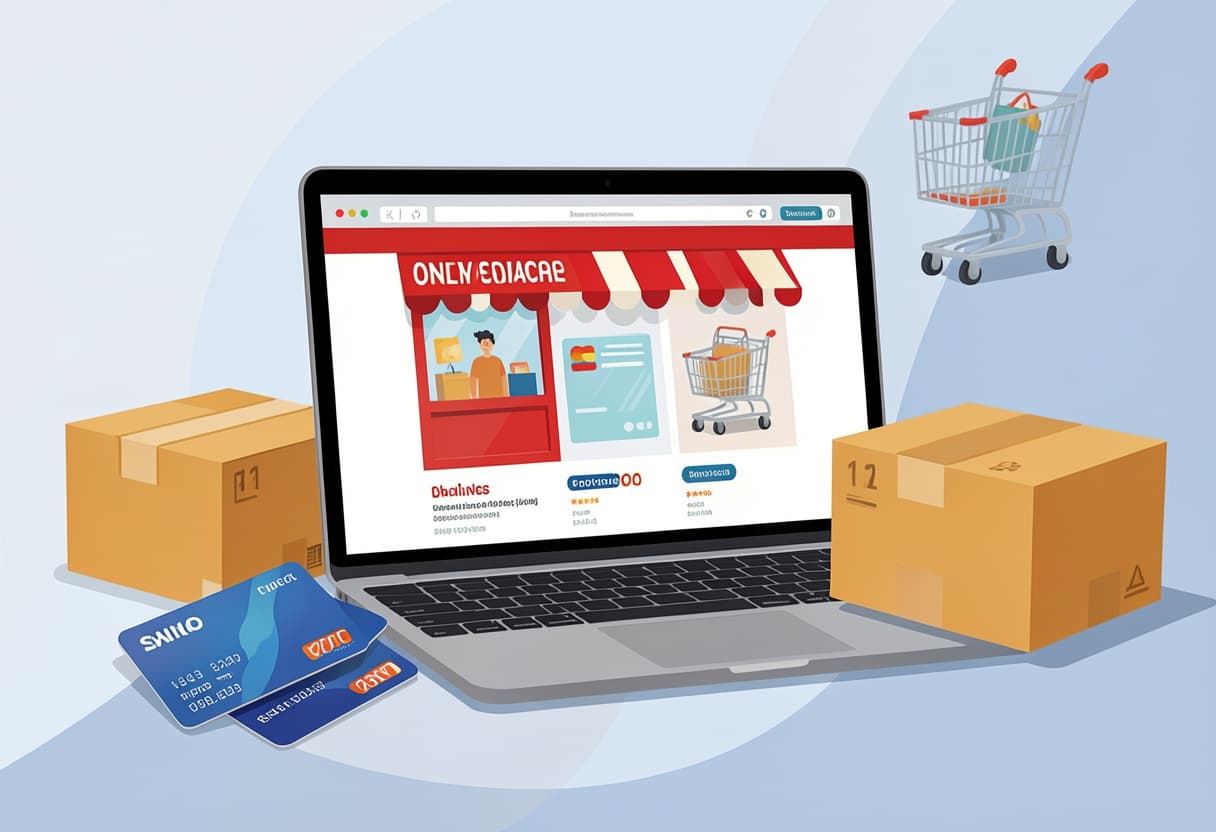
E-commerce — electronic commerce, if we're being formal — covers any transaction that happens online. A business sells its products or services through a digital storefront that never closes, without the overhead of a physical shop.
That's really the whole difference from traditional retail: geography stops mattering. A customer can discover your brand, browse your catalog, and place an order from their couch, at midnight, on their phone or their laptop.
Practically every industry has jumped on board by now — fashion, food, industrial goods, online courses, even niche hobby products. E-commerce has become a genuine growth lever. As long, of course, as what's running behind the scenes is actually built to work.
How Does an Online Store Work, Step by Step?
Think of an online store as a guided path: the customer arrives, browses, makes up their mind, orders, and waits for the package to show up. Every step counts. One misstep — a slow-loading page, a missing piece of information, a checkout form that asks too much — and that's an abandoned cart.
Across the projects we run at Monark IT, customers almost always drop off at the exact same spot: when shipping costs pop up too late in the process, or when checkout suddenly demands way more information than expected.
How Does a Customer Discover Your Products?
It all starts well before the purchase — with discovery. A visitor lands on your site through a Google search, an ad, social media, or because a friend mentioned you.
At that moment, your site has one job: build trust, and build it fast. Clear descriptions, photos that actually make someone want the product, and just enough information to help them decide. And underneath all of that sits SEO — without visibility in search engines, even the most beautifully designed store stays completely invisible.
What Does Placing an Order Actually Look Like?
Once the product's picked, it's off to the cart, then checkout. This step has to be quick and frictionless — it's literally where sales are won or lost.
The site needs to let people enter their details, choose a shipping option, and pay, without hitting unnecessary detours along the way.
A checkout that drags on loses even the most motivated buyers. For reference, the average cart abandonment rate typically sits well above 60% across industries — a number that says a lot about how much every single detail in that flow really matters.
Why Do Payment and Shipping Matter So Much?
Payment is the moment of truth in the trust between you and your customer. Hesitate for even a second, and they're gone.
Payment methods need to match the market you're selling into — card payments, cash on delivery, or whatever local option is standard in that country.
Shipping carries just as much weight. Customers want clear timelines, order tracking, and zero unpleasant surprises along the way.
What It Actually Takes for an Online Store to Perform
A store that performs is never just a product catalog sitting online. It's a bunch of moving pieces that all have to click together.
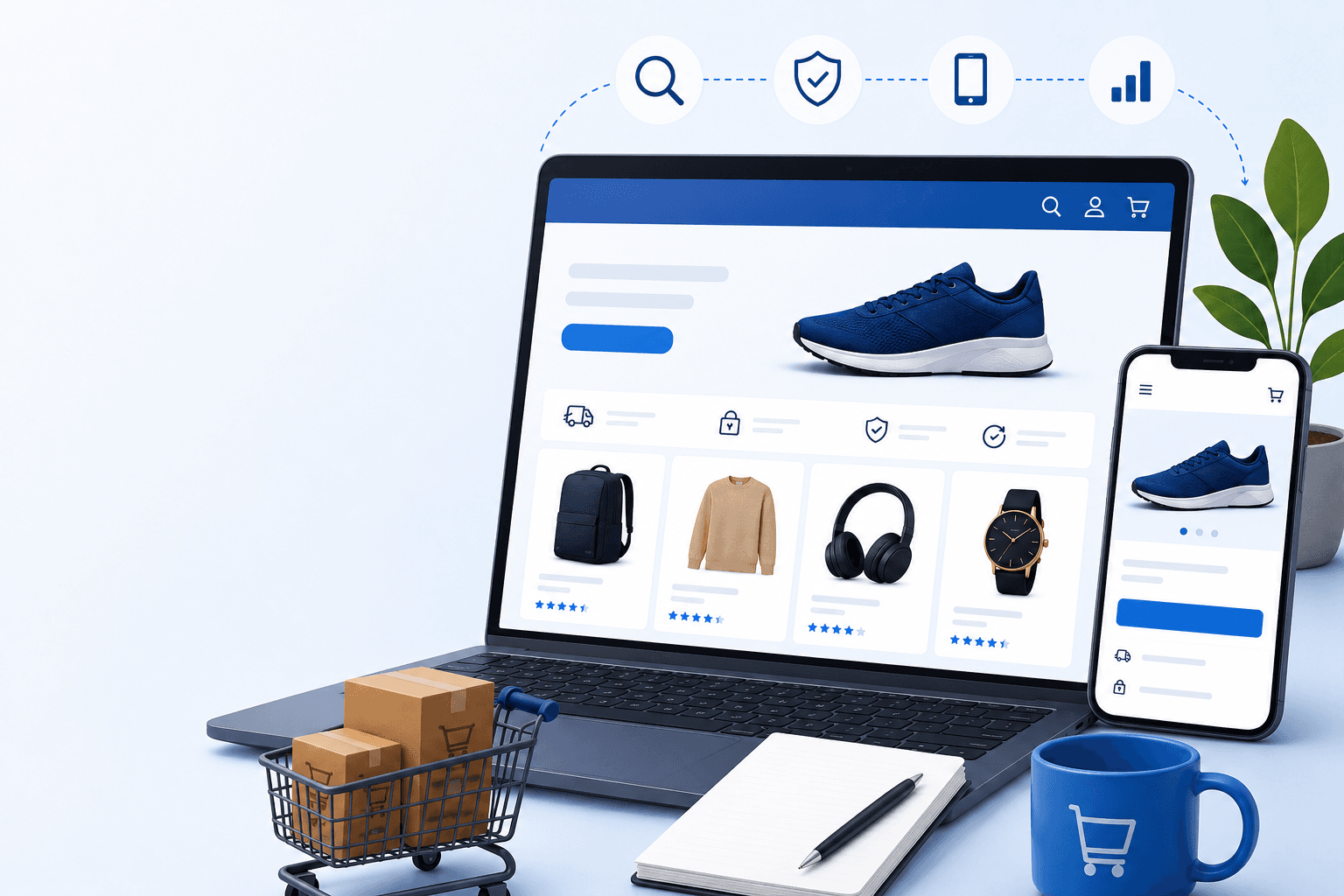
Why User Experience Makes All the Difference
A visitor should find what they're looking for without breaking a sweat. Confusing navigation or a site that's a hassle to use, and they're out the door — it really is that simple.
A solid user experience comes down to a handful of fundamentals:
- intuitive navigation;
- flawless display on mobile;
- clear, well-written product pages;
- a streamlined checkout flow.
Why Product Pages Carry So Much Weight in the Decision
The product page is often where the sale actually gets won or lost. It's where customers go looking for answers to whatever's still holding them back.
A good product page covers:
- the product's key features;
- its real, tangible benefits;
- quality visuals;
- shipping details;
- whatever helps build confidence.
The more information a customer has on hand, the less they have to think before hitting "buy."
What Technology Changes Behind the Scenes
Behind the storefront your customers see, there's a whole engine running that they'll never notice — and that's exactly the point.
A solid e-commerce solution makes it much easier to handle:
- product management;
- order tracking;
- inventory;
- performance analysis;
- integration with your other tools (CRM, accounting, marketing).
That saves a serious amount of time and takes a lot of the chaos out of day-to-day operations. Which technical route makes sense — an e-commerce CMS, a custom build, or a marketplace — really depends on your product volume, your budget, and how big you're planning to grow. It's something we always work through with clients before recommending one architecture over another.
What E-commerce Really Brings to a Business
Going online opens doors, but the real win is access to entirely new markets. A business can sell well beyond its usual reach and connect with customers who'd otherwise never have heard of it.
How E-commerce Helps You Actually Understand Your Customers
Unlike a physical store, an online store talks back. It generates real data on what visitors actually do, not just what you assume they do.
You can track:
- your most-viewed products;
- where your traffic is coming from;
- buying habits and patterns;
- the exact moments people drop off.
All of that lets you adjust your strategy based on evidence over time, instead of just guessing and hoping.
The Real Challenges of an E-commerce Project
E-commerce opens up real opportunities, but succeeding online takes an actual strategy — not just a site that technically exists somewhere on the internet.
Building the store is only step one. You still have to bring people in, earn their trust, and keep improving the experience long after launch.
How Do You Actually Bring Customers to Your Store?
A store nobody can find won't sell a thing. A few levers help get the word out:
- SEO;
- digital advertising;
- social media;
- email marketing.
Generally speaking, a solid strategy leans on several of these channels at once, rather than betting everything on just one.
Why Some Online Stores Simply Don't Sell
When sales aren't coming in, the causes tend to repeat themselves:
- a poor user experience;
- not enough trust signals;
- a site that's too slow;
- no real SEO strategy behind it;
- a checkout process that's overly complicated.
Reviewing your performance regularly helps you pinpoint exactly where things get stuck. If your store already exists but just isn't converting, a targeted redesign is often enough to turn things around — no need to rebuild from zero.
How Do You Actually Get an E-commerce Project Off the Ground?
Before building anything, it's worth mapping out a clear strategy first. The early steps usually look something like this:
- identify your market and your customers;
- define your product offering;
- pick the right model (your own store, a marketplace, or both);
- choose the technical solution that fits;
- put together your acquisition strategy (SEO, ads, social media).
That groundwork helps you dodge the usual rookie mistakes and sets up a store that can actually grow and evolve as you go.
FAQ — Online Stores and E-commerce
How much does it cost to build an online store?
It depends a lot on how many products you're selling, how much customization you want, and which features make the list (payments, inventory management, integrations). An initial audit is usually the fastest way to get a realistic sense of the budget before diving in.
Do you need inventory to sell online?
Not necessarily. Dropshipping or made-to-order selling both let you get started without managing stock yourself — though logistics still need to be figured out one way or another.
What's the difference between an online store and a marketplace?
An online store is entirely yours — your brand, your rules. A marketplace like Amazon is shared ground where multiple sellers show up side by side — you lose some control over your image, but you gain instant visibility in return.
How long does it take to launch an online store?
It varies with how complex the project is, but you're generally looking at several weeks between nailing down the strategy, building the site, and actually going live.
Ready to Get Started?
E-commerce is a real opportunity for businesses that want to sell more and reach new customers. But a high-performing online store doesn't happen by accident — it takes the technical side, the user experience, and the sales strategy all pulling in the same direction. That's exactly what we build into every e-commerce project at Monark IT.
Request a free audit of your e-commerce project and get a clear picture of which levers to pull to turn your visitors into customers.